
Laurel Valley POA
The Peaceful Side of the Smokies
|
Laurel Valley POA
The Peaceful Side of the Smokies
|

Preparing Homes for Wildfire
Research around home destruction vs. home survival in wildfires point to embers and small flames as the main way that the majority of homes ignite in wildfires. Embers are burning pieces of airborne wood and/or vegetation that can be carried more than a mile through the wind and can cause spot fires and ignite homes, debris and other objects. Leaves in gutters, near the house, under porches and decks are fuel that will enable the quick spreading of fire, should we have a wildfire in our community.
Leaf Cleanup in Laurel Valley Made Easy with Firewise Leaf Blowers
The Firewise committee used some of their grant dollars to purchase two (2) STIHL BR 600Z backpack blowers (high powered, but not requiring major strength to use) as well as safety equipment for use by Laurel Valley residents. There is no charge to LVPOA members for the use of these blowers.
Take advantage of this opportunity. Download and complete the Laurel Valley Firewise USA Committee Equipment Lending and Release Agreement below. Then, contact Scott Crocker at [email protected] and reserve a blower for your use.
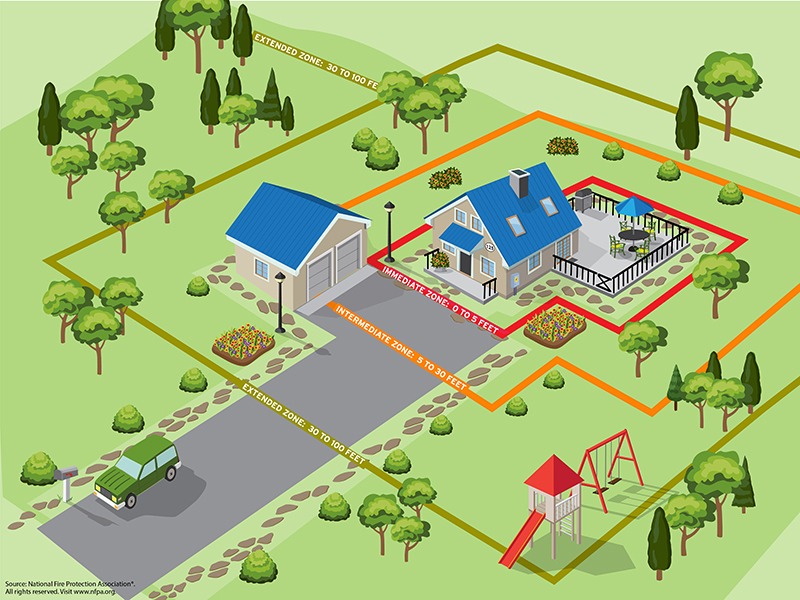
Firewise training specifically cites the Defensible Space Zone: a "Noncombustible Area" at least 3 feet wide around the base of your home. This area needs to have zero potential for ignition from flying embers or low-intensity fire. Use rock mulches or hard surfaces in this area. Keep it free of woodpiles, wood mulches, dead plants, dried leaves and needles, flammable shrubs, and debris. This zone is the same as the National Fire Protection Association's Immediate Zone.
 [email protected]
Leaf Cleanup in Laurel Valley Made Easy with Firewise Leaf Blowers
The Firewise committee used some of their grant dollars to purchase two (2) STIHL BR 600Z backpack blowers (high powered, but not requiring major strength to use) as well as safety equipment for use by Laurel Valley residents. There is no charge to LVPOA members for the use of these blowers.
Take advantage of this opportunity. Download and complete the Laurel Valley Firewise USA Committee Equipment Lending and Release Agreement below. Then, contact Scott Crocker at [email protected] and reserve a blower for your use.
Firewise training specifically cites the Defensible Space Zone: a "Noncombustible Area" at least 3 feet wide around the base of your home. This area needs to have zero potential for ignition from flying embers or low-intensity fire. Use rock mulches or hard surfaces in this area. Keep it free of woodpiles, wood mulches, dead plants, dried leaves and needles, flammable shrubs, and debris. This zone is the same as the National Fire Protection Association's Immediate Zone.
What is the Home Ignition Zone?
The concept of the home ignition zone was developed by retired USDA Forest Service fire scientist Jack Cohen in the late 1990s, following some breakthrough experimental research into how homes ignite due to the effects of radiant heat. The HIZ is divided into three zones.
[email protected]Immediate Zone
The home and the area 0-5’ from the furthest attached exterior point of the home; defined as a non-combustible area. Science tells us this is the most important zone to take immediate action on as it is the most vulnerable to embers. START WITH THE HOUSE ITSELF then move into the landscaping section of the Immediate Zone.
- Clean roofs and gutters of dead leaves, debris and pine needles that could catch embers.
- Replace or repair any loose or missing shingles or roof tiles to prevent ember penetration.
- Reduce embers that could pass through vents in the eaves by installing 1/8 inch metal mesh screening.
- Clean debris from exterior attic vents and install 1/8 inch metal mesh screening to reduce embers.
- Repair or replace damaged or loose window screens and any broken windows. Screen or box-in areas below patios and decks with wire mesh to prevent debris and combustible materials from accumulating.
- Move any flammable material away from wall exteriors – mulch, flammable plants, leaves and needles, firewood piles – anything that can burn. Remove anything stored underneath decks or porches.
| File | Uploaded | |
|---|---|---|
Pages
- Home
- Member Resources
- Registration Instructions
- Contact or Comment to the Board
- Architectural Review - Mandatory
- Online Payments
- Main Entrance
- Entrance & Security
- Gate Access
- Firewise in Laurel Valley
- FIRE DANGER STATUS
- Firewise
- Fire Safety Guidelines
- Fire Pit Safety Tips
- Laurel Valley Emergency Evacuation
- Preparing Homes for Wildfire
- Your Step-by-Step Prep Guide
- Address Signs for Emergencies
- Roads & Snow Removal
- Snow & Ice Response Policy
- General Roads & Weather FAQ
- Property Rental
- Rentals in Laurel Valley
- Waste Disposal
- Trash Compactor Operation
- Recycling
- Board Member Resources
- Board Minutes and Reports
- Bear Information
- Emergency Contacts & Local Links
- In and Around Laurel Valley
- Laurel Valley Map
- Local Attractions - Links
- Dues & Title Transfers